



















If you are flying from Vancouver to France, Italy, Spain, Germany or Portugal, plan to land with some euros in cash. Cards work widely across Europe, but a few hundred euros covers the moments when they don't: a market stall, a small café, a bus ticket or a tip. A sensible starting point is roughly €300 to €500 in cash for a typical week, topped up as needed.
All five of these countries use the euro (EUR), so one currency covers the whole trip, even if you cross several borders.
Why bring euros in cash at all?
Paying by card is common in European cities, but cash still has its place. Small independent shops, outdoor markets, bakeries, kiosks and some family-run restaurants may prefer cash or set a minimum for card payments. Rural areas and small towns can be more cash-friendly than big city centres.
Cash is also a useful backup. If your card is declined, a terminal is down, or your bank flags a foreign purchase, having euros in your wallet means you can still eat, get a taxi, or buy a train ticket while you sort it out.
Finally, arriving with cash takes the pressure off your first hours. After a long flight from YVR, it is nice not to hunt for a machine before you can pay for a coffee or a ride into town.
How many euros for a typical week?
There is no single right number, because it depends on how you travel and how much you plan to put on a card. A simple way to think about it is to cover small daily spending in cash and leave hotels, flights, rail passes and big restaurant bills for your card.
Here is a worked example using our live rate. As of Tuesday October 13, 2026 at 9:44 AM Pacific, FonderX sells euros at 1.6200 CAD per 1 EUR. Rates change through the day, so check today's rates before you come in.
| Cash use for one week | Euros | Cost in CAD at 1.6200 |
|---|---|---|
| Coffee, bakeries and quick lunches | €150 | $243.00 |
| Markets and small shops | €100 | $162.00 |
| Local transit and taxis | €80 | $129.60 |
| Tips and small extras | €70 | $113.40 |
| Total | €400 | $648.00 |
If you mostly pay by card, €200 (about $324.00 CAD at the same rate) may be enough as a cushion. If you prefer cash for most day-to-day spending, or you are visiting smaller towns, €600 (about $972.00 CAD) gives you more room. For a two-week trip, many people simply double their one-week figure or bring a week's worth and top up later.
Small bills vs large bills
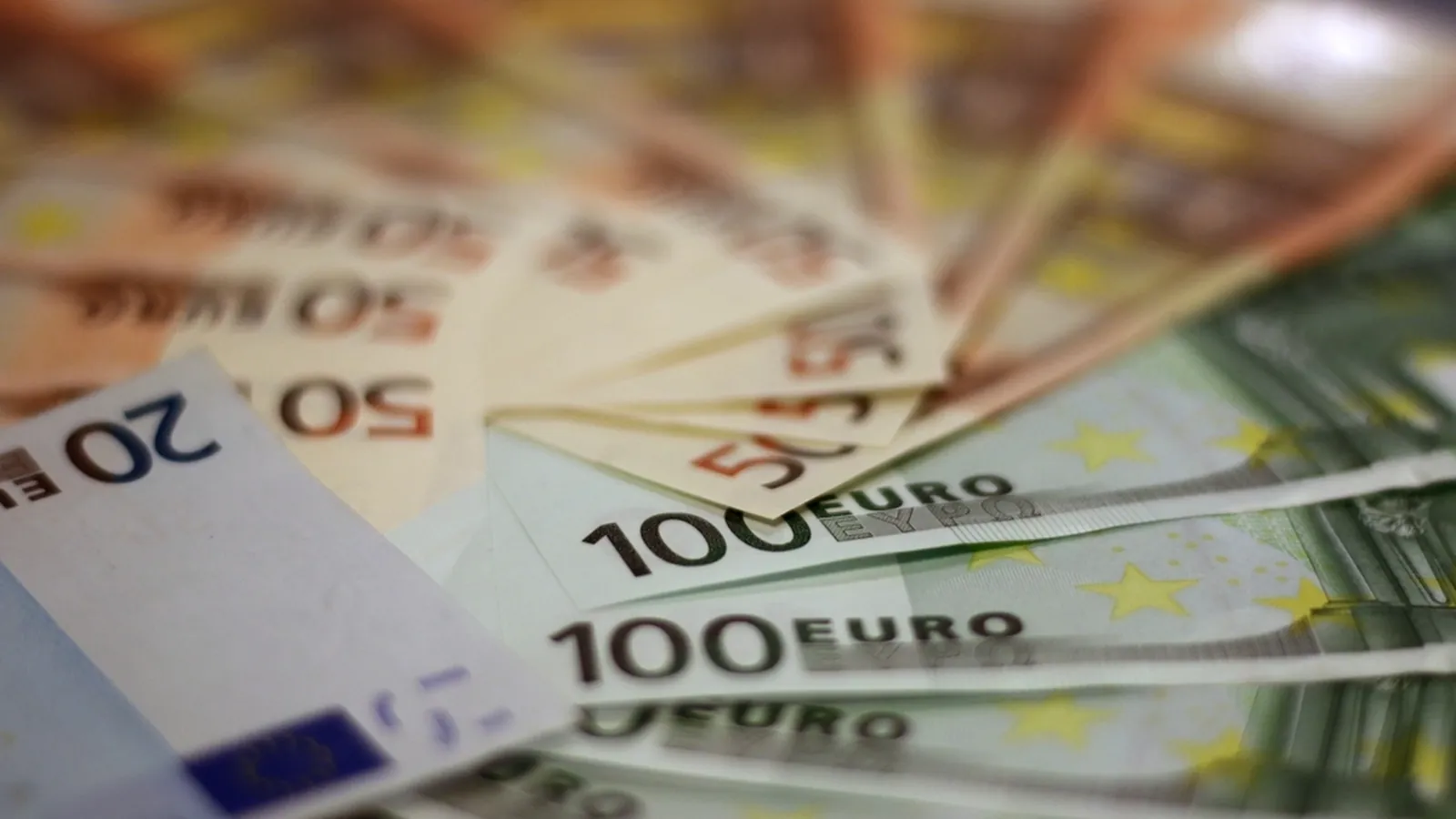
Euro banknotes come in €5, €10, €20, €50, €100, €200 and €500, and coins run from 1 cent up to €2. For everyday travel, the most useful notes are €20 and €50, with a few €10s and €5s for small purchases.
Large notes like €200 and €500 can be awkward to spend. A café or market stall may not have change for them, and some smaller businesses may hesitate to accept them. When you buy your euros, it is worth asking for a mix of smaller denominations.
A practical split for €400 might look like:
- 4 × €50 = €200
- 8 × €20 = €160
- 2 × €10 = €20
- 4 × €5 = €20
Keep a few coins handy once you arrive. They are useful for transit machines, public washrooms and small purchases.
Cash tips for your trip
A few simple habits make carrying cash in Europe easier and safer:
- Split your cash between your wallet and a second place, such as a money belt or a zipped bag pocket.
- Carry only what you need for the day and leave the rest in your hotel safe if one is available.
- Count your change, especially in busy tourist areas.
- Keep a card as backup, and tell your bank you are travelling so purchases are less likely to be blocked.
- Tipping customs vary by country and by situation, so check a current guide for each country you visit rather than assuming North American habits apply.
If you come home with leftover euros, you don't have to spend them at the airport. FonderX also buys euros back. As of the same time, our We Buy rate for EUR is 1.5667 CAD, so €100 brought back would be worth $156.67 CAD at that rate. Many travellers also just keep a small stash for their next trip.
Buying euros at FonderX before you fly
FonderX is a walk-in currency exchange in New Westminster, serving customers from Burnaby, Coquitlam, Surrey and across Greater Vancouver. We buy and sell about 40 world currencies in cash, including euros.
To make your visit quick:
- Check today's rates and decide roughly how many euros you want.
- Bring Canadian cash. We are cash only, so we can't take cards, e-transfers or cheques.
- Bring valid government photo ID.
- Ask for the denominations you prefer, such as €20 and €50 notes.
Come in a few days before your flight rather than on the way to the airport, so you have time to plan. If you work as a paramedic, firefighter, police officer, 911 dispatcher, nurse, ER doctor or teacher, ask about our Frontline Heroes Rate and bring your work ID.
Visit FonderX
FonderX Currency Exchange Inc. is at Unit 2, 723 12th Street, New Westminster, BC V3M 4J8. We are open Monday to Friday, 9:30 AM to 6:00 PM, and closed weekends and BC statutory holidays. We are cash only, and valid government photo ID is required. Questions? Call (778) 759-0400 or see our contact and hours page.
Frequently asked questions
How much cash should I bring to Europe for a week?
A common starting point is about €300 to €500 in cash for a week, with a card for hotels and larger bills. Bring more if you plan to pay cash for most daily spending or visit smaller towns.
Do France, Italy, Spain, Germany and Portugal all use the euro?
Yes. All five countries use the euro, so the same cash works across your whole trip.
Which euro bills are best for travel?
€20 and €50 notes are the easiest to use, with a few €10 and €5 notes for small purchases. Large notes like €200 and €500 can be hard to break at small shops.
Where can I buy euros cash near Vancouver?
FonderX in New Westminster sells euros in cash, Monday to Friday, 9:30 AM to 6:00 PM. Bring Canadian cash and valid government photo ID.
Can I sell leftover euros back after my trip?
Yes. FonderX buys euros back in cash at our posted We Buy rate, which changes through the day.